Aquaculture

Pig Farming

Horticulture

Women Empowerment

Natural Farming

FPO/FPCs

Women SHG's

Capacity Building

Aquaculture Field School

CRPs

DRE

Aqua Entrepreneurs
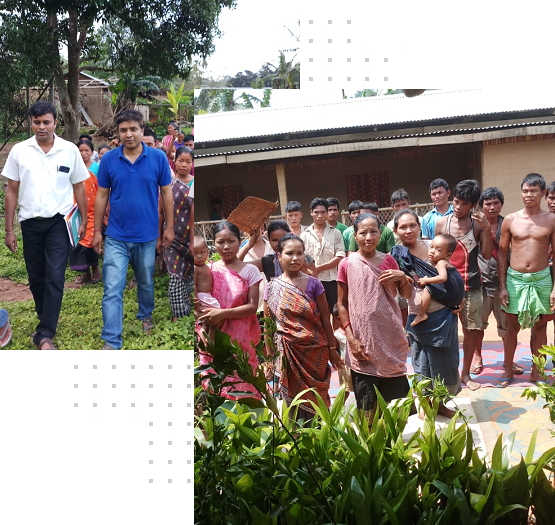

Kamrup Metro

Nagaon

West Karbi Anglong

Dima Hasao

Hojai

Morigaon
Since 2015, life smiled on this couple as the wheel of fortune changed. Prior to that, Jonison Boro was struggling to meet the basic needs of his family comprising his wife Jonaki Boro and three sons. His wages as a labour at a coal mine in Meghalaya was not sufficient to ensure the minimum living standards. But after getting involved with Kalong-Kapili, there has been no looking back for him. Armed with the requisite training, confidence and support, he took to Assam Lemon, Turmeric and Areca nut cultivation along with fish and pig farming. Now, he is earning around 3.5 lakh per annum, has a comfortable house and his kids are going to a good school.
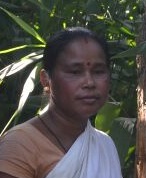
When life assailed her with a slew of challenges, it was for Kalong-Kapili to show a way out to her to overcome those hurdles, some of which were really tragic and agonizing. She lost her husband when she was carrying her daughter, and this would have crushed her mentally and emotionally for life. But that did not happen as she was shown a way to forget her sorrows and concentrate on building a future for her daughter. She became a beneficiary of Kalong-Kapili in 2008 and availed training and credit linkage. Now she is a successful fish farmer. She could give a good education to her daughter who is married and settled.
He is now a role model for rural youths. He has ushered a kind of revolution in Dimoria area with pig farming. But this has been possible only after 2010 when he became involved with Kalong-Kapili. Earlier, he was running from pillar to post to get a loan to start a pig farm, but had failed. Kalong-Kapili supported him with credit linkage of Rs 50,000 under a pig development scheme in Kamrup (Metro). Now, he is the owner of a flourishing pig farm and is supplying quality piglets to six districts in Assam.

With requisite technical guidance from Kalong-kapili, she has been able to convert her land measuring around 8-bighas into a flourishing Integrated Fish Farming zone. With finances improving, she could fulfill the aspirations of all her family members, ensuring that they could experience ‘luxury’ that can be attained through higher income. For Nilima and her family, hygienic sanitation and potable water throughout the year was kind of a luxury and a far-fetched wish. But this impossible dream became a reality with integrated fish farming. A good house now shelters her family, her dreams and her hopes.
A waiter turned fish farmer, Ranjit Rabha has proved to be one of the best students of Kalong-Kapili by learning the trade to such an extent that today he is invited as a resource person to nearby areas. His 10-bigha plot of land has been developed into an Integrated Fish Farming space. Ranjit’s living standard has improved as his income has increased, and he is the proud owner of a motor bike, the first one in his remote area. He has even built a comfortable house and has opened a hardware store. With his hard work and dedication for learning, Ranjit has been able to climb the social ladder and is now playing a leadership role in the community.

Life was full of struggles for this mother of three children. But when Kalong-Kapili introduced her village to various livelihood options including inter-cropping, rubber cultivation, horticulture etc., things changed. Under the technical guidance and support of the NGO, she undertook rubber cultivation in her plot of land measuring around 7-bighas. This initiative has made her a successful rubber cultivator. She has been able to send all her three children to good schools with residential facilities. She and her husband have been able to build a new dwelling with proper hygienic sanitation. They now also have access to potable water throughout the year.


Wishing you all a very Happy Durga Puja.
A Team from WorldFish Visits Aqua Tech Park of Kalong-Kapili
Today, we had the distinct honour of welcoming a distinguished team from WorldFish to the Aqua Tech Park of Kalong-Kapili.
We were delighted to host Dr. Marleen Schutter, PhD, Scientist & Team Lead – Governance and Policy, and Dr. S. K. Dubey from WorldFish, along with key officials from other stakeholder organisations.
During the visit, the delegation toured the entire Aqua Tech Park facility, interacted with our team, and learned about our ongoing initiatives, infrastructure, innovations, and field interventions. We are pleased that the team appreciated our efforts towards promoting sustainable, modern and climate-resilient aquaculture.
The visit marks an encouraging step towards building a strong collaborative partnership with WorldFish to promote innovation, empower farming communities, and contribute to strengthening the aquaculture sector across Northeast India.
We look forward to exploring meaningful opportunities for collaboration and creating greater impact for farmers and communities. 🚀💡
#KalongKapili #WorldFish #Aquaculture #SustainableFisheries #NorthEastIndia #AquaTechPark #RuralDevelopment #CommunityEmpowerment #InnovationInAquaculture
🌱🐟 A Day of Learning, Collaboration & Sustainable Aquaculture! 🐟🌱
we were delighted to welcome a team of Master Trainers from our partner organisation, SELCO Foundation, to the Aqua Tech Park of Kalong Kapili for a one-day training-cum-exposure visit on Sustainable, Modern and Climate Resilient Aquaculture Practices on 26 September, 2026.
The visit provided an opportunity for knowledge exchange, practical learning and meaningful discussions around innovative, sustainable and climate-resilient approaches to aquaculture.
We are especially honoured to welcome Dr.K.Krishnamurthy ,Fisheries Consultant, SELCO Foundation, along with the entire team. His valuable insights and experience added immense value to the learning and interaction.
The programme was graced by the presence of Mr. Jyotish Talukdar, Director, Kalong-Kapili, and Mr. Binay Kumar Das, Deputy Director, Kalong-Kapili, along with Executives, Fisheries Technical Expert, Staffs of Kalong-Kapili. Their presence and active participation contributed to making the training-cum-exposure visit an enriching platform for knowledge sharing, interaction and collaboration.
We look forward to strengthening this partnership and working together towards promoting sustainable, inclusive and innovative aquaculture practices for farming communities. 🤝🌾🐟
Since 2015, life smiled on this couple as the wheel of fortune changed. Prior to that, Jonison Boro was struggling to meet the basic needs of his family comprising his wife Jonaki Boro and three sons. His wages as a labour at a coal mine in Meghalaya was not sufficient to ensure the minimum living standards. But after getting involved with Kalong-Kapili, there has been no looking back for him. Armed with the requisite training, confidence and support, he took to Assam Lemon, Turmeric and Areca nut cultivation along with fish and pig farming. Now, he is earning around 3.5 lakh per annum, has a comfortable house and his kids are going to a good school.
When life assailed her with a slew of challenges, it was for Kalong-Kapili to show a way out to her to overcome those hurdles, some of which were really tragic and agonizing. She lost her husband when she was carrying her daughter, and this would have crushed her mentally and emotionally for life. But that did not happen as she was shown a way to forget her sorrows and concentrate on building a future for her daughter. She became a beneficiary of Kalong-Kapili in 2008 and availed training and credit linkage. Now she is a successful fish farmer. She could give a good education to her daughter who is married and settled.
He is now a role model for rural youths. He has ushered a kind of revolution in Dimoria area with pig farming. But this has been possible only after 2010 when he became involved with Kalong-Kapili. Earlier, he was running from pillar to post to get a loan to start a pig farm, but had failed. Kalong-Kapili supported him with credit linkage of Rs 50,000 under a pig development scheme in Kamrup (Metro). Now, he is the owner of a flourishing pig farm and is supplying quality piglets to six districts in Assam.
With requisite technical guidance from Kalong-kapili, she has been able to convert her land measuring around 8-bighas into a flourishing Integrated Fish Farming zone. With finances improving, she could fulfill the aspirations of all her family members, ensuring that they could experience ‘luxury’ that can be attained through higher income. For Nilima and her family, hygienic sanitation and potable water throughout the year was kind of a luxury and a far-fetched wish. But this impossible dream became a reality with integrated fish farming. A good house now shelters her family, her dreams and her hopes.
A waiter turned fish farmer, Ranjit Rabha has proved to be one of the best students of Kalong-Kapili by learning the trade to such an extent that today he is invited as a resource person to nearby areas. His 10-bigha plot of land has been developed into an Integrated Fish Farming space. Ranjit’s living standard has improved as his income has increased, and he is the proud owner of a motor bike, the first one in his remote area. He has even built a comfortable house and has opened a hardware store. With his hard work and dedication for learning, Ranjit has been able to climb the social ladder and is now playing a leadership role in the community.
Life was full of struggles for this mother of three children. But when Kalong-Kapili introduced her village to various livelihood options including inter-cropping, rubber cultivation, horticulture etc., things changed. Under the technical guidance and support of the NGO, she undertook rubber cultivation in her plot of land measuring around 7-bighas. This initiative has made her a successful rubber cultivator. She has been able to send all her three children to good schools with residential facilities. She and her husband have been able to build a new dwelling with proper hygienic sanitation. They now also have access to potable water throughout the year.